
If you support an autistic child-at home, in a classroom, or in therapy-you’ll know communication isn’t just about words. It’s about feeling safe enough to try, having enough support to practise, and finding tools that respect a child’s sensory needs and learning style.
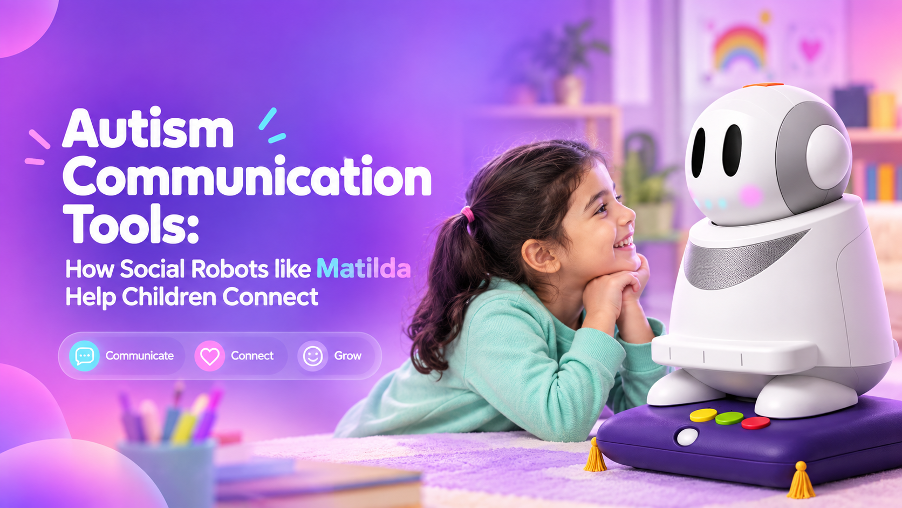
Across Australia, families and professionals are combining proven approaches like AAC (augmentative and alternative communication) and speech therapy autism supports with a newer option: social robots. Used thoughtfully, social robots can create predictable, low-pressure practice opportunities that help children build confidence with eye contact, turn-taking, joint attention, and emotional understanding.
This guide explains today’s most effective autism communication tools-and how research-backed companion robotics (including MyMatilda) can support children to connect more comfortably with the people around them.
Autism communication tools are supports that help an autistic person express needs, share ideas, and participate socially. Some tools focus on expression (for example, an AAC app that helps a child make requests). Others focus on interaction (for example, practising greetings, conversation turns, or recognising emotions).
In practice, the best outcomes usually come from a combination of:
There’s no single “best” tool-there’s the right tool for the child, the setting, and the goal. Below are widely used options in Australia, often recommended or supported by speech pathologists and educators.
Visuals reduce uncertainty and help children understand what’s happening now, what’s next, and what’s expected. They’re especially helpful for transitions, classroom routines, and reducing stress that can block communication.
Picture Exchange Communication System (PECS) and other symbol-based approaches can support functional communication, particularly for requesting. They’re often used alongside other AAC approaches and can be tailored to a child’s preferences.
AAC can include dedicated devices or tablet-based apps that produce speech. These tools can be effective for building language, supporting participation, and reducing frustration-especially when everyone in the child’s environment is trained to model and respond to AAC consistently.
Social stories and scripts can make “hidden rules” more explicit-like how to join a game, how to cope with losing, or what to do when you feel overwhelmed.
Board games, collaborative play, and structured group programs can support turn-taking, flexible thinking, and conversational reciprocity. The key is matching the activity to the child’s sensory profile and interests.