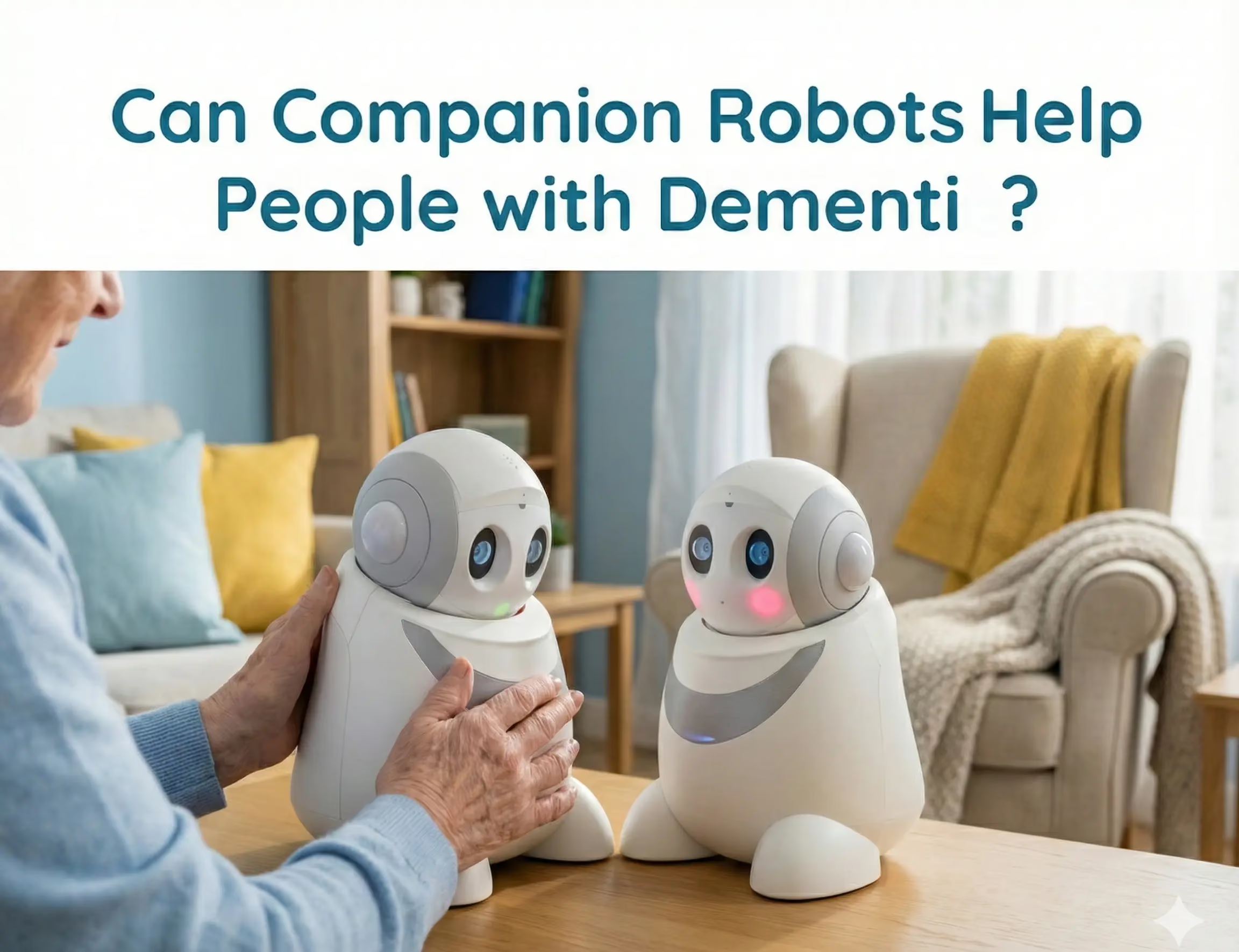

Australia faces a significant challenge as the population ages. According to Dementia Australia, there are more than 487,500 people living with dementia in the country, and this number is increasing each year. Dementia affects memory, thinking and social engagement, leading to rising demand for quality, compassionate care.
Traditional support models — such as family care and aged care facilities — are vital but under pressure. This has spurred interest in innovative care tools, including companion robots, which may reduce isolation and support wellbeing.
Understanding the evidence — both research-based and provider perspectives — is essential to separate promising practice from hype.
A companion robot is a robotic device designed to interact socially with humans. Unlike industrial or task-based robots, companion robots focus on communication, presence, and engagement. They are engineered to respond with speech, movement, and sometimes learning behaviours.
There are variations:
These devices are not replacements for care workers or family, but potential supplements that enhance quality of life.
Dementia symptoms vary, but commonly include:
Carers, whether family or professionals, often struggle with:
This points to the need for tools that support social engagement, routine, and emotional comfort — areas where companion robots are being explored.
Although research on robotics in dementia care is still emerging globally, there are insightful findings relevant to Australia.
Globally, researchers have studied various companion robots in aged care settings. For example:
In Australia, early evaluations in residential aged care suggest that residents may enjoy robotic interactions, especially when paired with supportive staff facilitation.
Key point: While results are promising, the evidence base remains early-stage, and robots should complement — not replace — person-centred care.
Interviews with aged care providers indicate that staff:
Providers emphasise that technology must be ethical, user-friendly, and beneficial to both residents and carers.
This section outlines areas supported by emerging research and provider reports.
People with dementia often experience isolation. Companion robots:
This does not mean a robot replaces human care. Rather, it supplements human connection with non-judgmental interaction.
Some robots can:
These functions align with principles of dementia care that support continuity and cognitive stimulation.
Carers benefit when a tool:
In some settings, robots can give carers brief moments to attend to other tasks — always within a safe care plan.
Using robots in care brings important questions:
Australian providers stress that technology should enhance dignity, not replace human warmth.
My Matilda is an example of a human-like AI companion designed to support engagement, conversation, and wellbeing in aged care environments.
My Matilda is best viewed as part of a broader care strategy, guided by professionals and personalised to resident needs.
Companion robots are not magic solutions, but they offer a promising supplement when implemented thoughtfully.
For families:
For providers:
Technology works best when it aligns with evidence-based care principles and respects the person living with dementia.
Companion robots are emerging as a supportive tool in dementia care, especially in Australia’s ageing population. Early research and provider feedback suggest they can:
The evidence base is growing, and technology like My Matilda reflects a future where human warmth and responsible innovation work together to improve lives.