
Assistive technology helps autistic adults build independence, improve communication, manage daily routines and participate more confidently in work and community life. When chosen carefully and aligned with individual needs, assistive technology can support life beyond education — including independent living, employment and social connection.
Autism is a lifelong neurodevelopmental condition, and support needs do not end when formal education does. Many autistic adults experience challenges related to:
In Australia, growing attention is being placed on adult-focused autism supports, particularly through the National Disability Insurance Scheme (NDIS). Assistive technology plays a key role by helping individuals translate skills learned earlier in life into practical, everyday situations.
Assistive technology (AT) refers to tools, devices or systems that support a person to perform tasks, communicate, or participate more independently in daily life.
For autistic adults, AT may include:
Importantly, assistive technology is not one-size-fits-all. The most effective supports are personalised, goal-driven and reviewed regularly.
For some autistic adults, spoken communication can be difficult, inconsistent or exhausting. Assistive technology can help by offering alternative or supplementary ways to express needs, preferences and ideas.
Examples include:
Research consistently shows that when communication barriers are reduced, people experience lower frustration, improved confidence and greater participation in social and work environments.
Managing everyday tasks can be challenging for autistic adults, particularly where routines change or tasks involve multiple steps.
Assistive technology can support:
Digital tools are especially useful because they provide consistent prompts without judgement, allowing people to engage at their own pace.
Beyond education, assistive technology is increasingly used to support:
Technology works best when introduced gradually and supported by trusted carers or professionals.
Evidence shows that assistive technology is most effective when:
Technology should support autonomy, not control behaviour or replace meaningful human relationships.
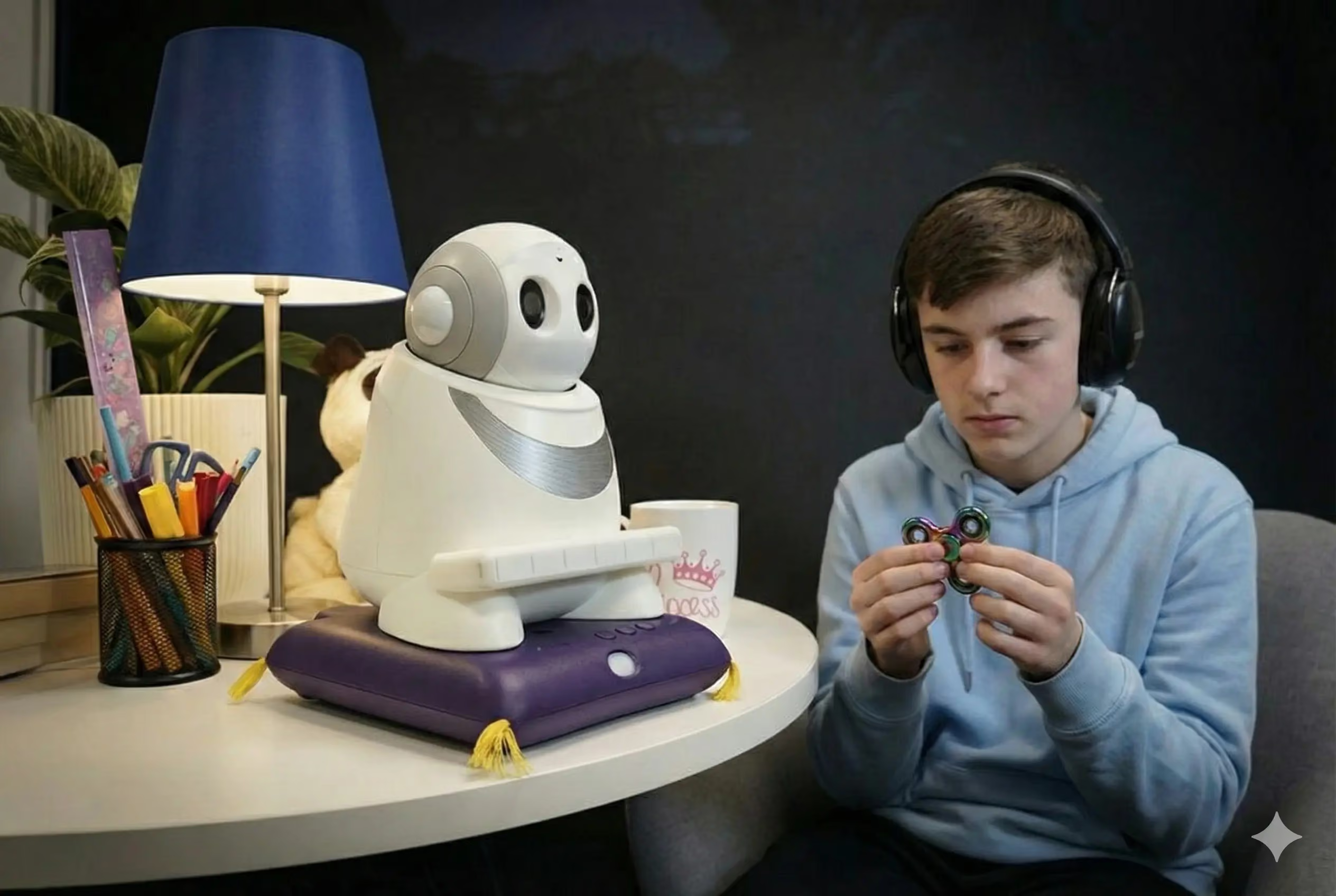
In recent years, interest has grown in interactive and companion-style technologies that focus on engagement rather than task completion alone.
These tools may:
While research is still emerging, early findings suggest these technologies can complement existing supports when used ethically and thoughtfully.
My Matilda is an example of an interactive, human-like companion designed to support engagement and routine in care and community settings.
Rather than positioning technology as a “fix”, My Matilda is best understood as a supportive tool that can be integrated into broader assistive strategies.
In practice, My Matilda may be useful:
Its role is not to replace carers or therapists, but to support wellbeing, routine and engagement in a respectful and person-centred way.
In Australia, many assistive technologies may be funded under the NDIS when they:
Assessment by allied health professionals (such as occupational therapists or speech pathologists) is essential to ensure suitability and appropriate use.
Before introducing any assistive technology, families and providers should consider:
Technology should always enhance dignity and autonomy.
Assistive technology is playing an increasingly important role in supporting autistic adults beyond the classroom. When chosen carefully and used alongside human support, it can enhance communication, routine, confidence and participation in everyday life.
Tools like My Matilda demonstrate how thoughtful, human-centred technology can contribute positively — not as a replacement for care, but as part of a broader support ecosystem that respects individual needs and preferences.