
Not all “AI tools” are created equal. In health, disability, aged care, and education contexts, the difference between a generic gadget and a trustworthy support comes down to evidence, safety, and human-centred design.
Matilda has been developed through more than 20 years of Australian R&D and is supported by a substantial research base (including 150+ research publications). The platform has also been deployed for 100,000+ days across Australia, Hong Kong, and Japan, and recognised through multiple innovation awards. In Australia, Matilda can also align with accessibility goals, including use cases relevant to NDIS settings.
Practical takeaway: when you’re choosing an assistive technology, look for clear evidence of testing, safety considerations, privacy practices, and guidance for real-world implementation-not just impressive demos.
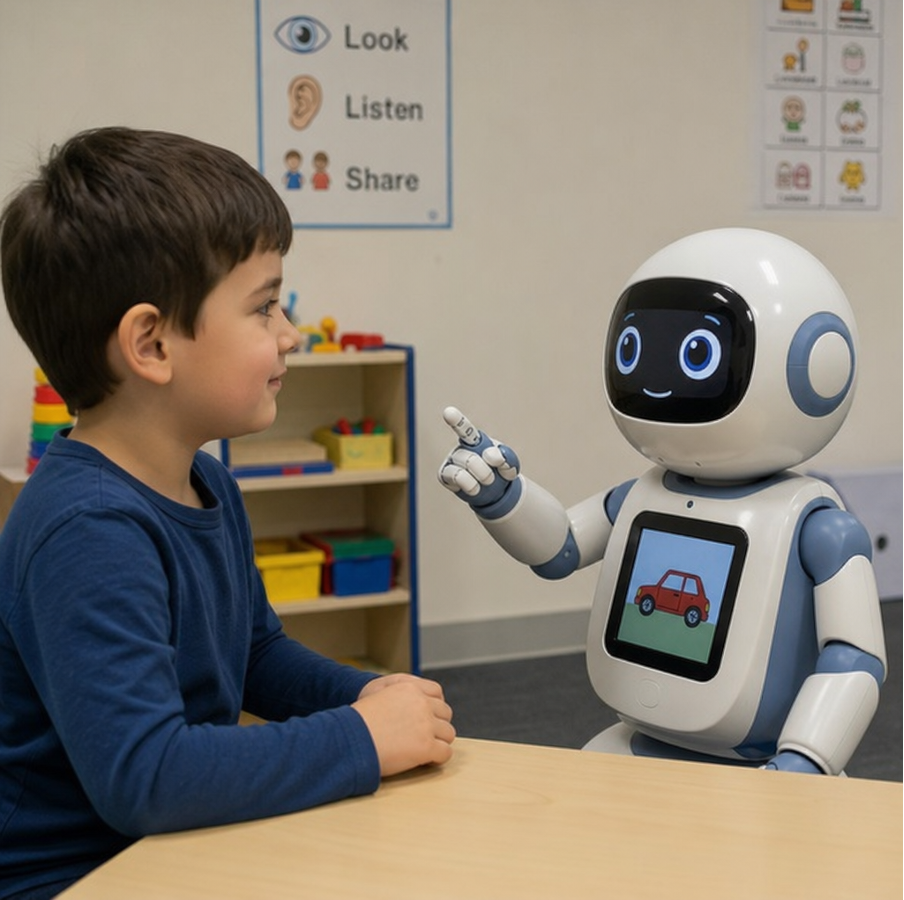
When used with appropriate goals and oversight, social robots can support multiple stakeholders.
The technology is only as effective as the plan around it. These tips can help you integrate tools in a neurodiversity-affirming, low-stress way.
Choose a single, measurable goal for 2–4 weeks (for example, “practise a greeting”, “request a break using AAC”, or “label three emotions”). Track small wins.
Check volume, lighting, and the physical space. Offer noise-reducing headphones if helpful. Build in an “all done” signal the child can use to end the activity safely.
After practising with a tool (AAC or robot), immediately create a natural opportunity to use the same skill with a person-parent, sibling, educator, or therapist. That transfer is where long-term impact happens.
AAC works best when adults model it (not only when a child is expected to use it). The same applies to robot-led practice: adults can model the words, gestures, and emotional responses we want children to learn.